
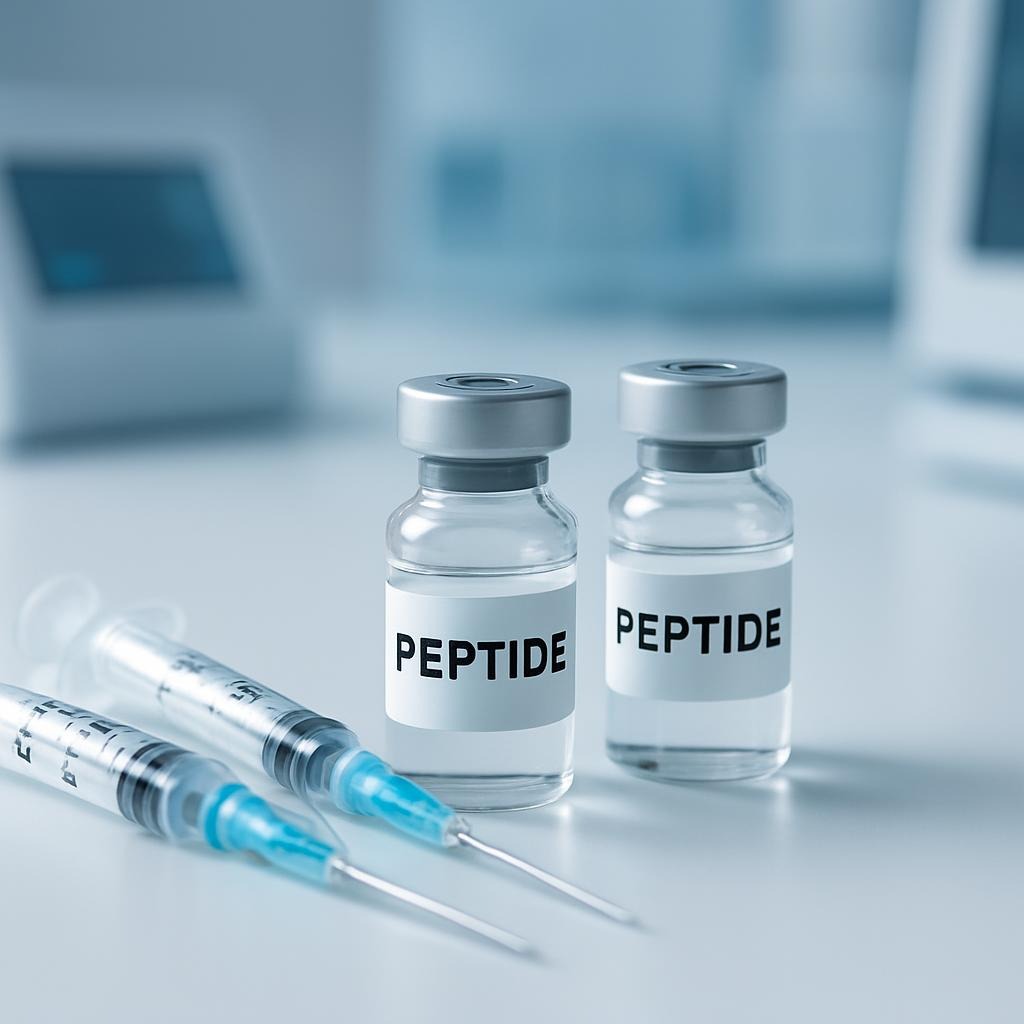
Look, I’ll be straight with you. Three years ago, I dropped $8,000 on peptides I barely understood. Read some Reddit posts, watched a few YouTube videos from guys with suspiciously perfect physiques, and thought I had it figured out.
I didn’t.
But here is what I learned after running BPC-157, TB-500, CJC-1295, Ipamorelin, and a handful of others. Some changed my recovery dramatically. Others? Expensive pee.
THE PEPTIDE THERAPY HYPE MACHINE (AND WHY IT’S HALF-RIGHT)
Peptide therapy isn’t magic. It’s also not snake oil. It is somewhere in the middle, which nobody wants to hear because nuance doesn’t sell courses.
Here is the reality of the space right now: Five years ago, you needed connections to even source legitimate compounds. Now? There are 47 telehealth companies selling peptides, half of which launched in the last 18 months.
That is both good and terrifying.
- Good: Accessibility means more research, more data, and more people tracking what actually works.
- Terrifying: The barrier to entry is so low that you have coaches recommending stacks they learned about three weeks ago.
What Peptides Actually Do (The Boring But Important Part)
Okay, quick biochemistry without the textbook nonsense.
If sleep optimization is your main goal, check out proper circadian rhythm management and sleep protocols. Peptides are short chains of amino acids.1 Your body makes them naturally. They signal cells to do specific things—heal tissue, release growth hormone, reduce inflammation, whatever. When you inject synthetic versions, you are amplifying that signal.
The Signal: Think of it like this. Your body is already whispering “heal that tendon.” Peptides turn that whisper into a megaphone.
The catch? Different peptides hit different receptors. BPC-157 is great for gut and connective tissue, but it won’t do a thing for your sleep. TB-500 is phenomenal for systemic inflammation, but it won’t spike your growth hormone.
Yet I constantly see people stacking five peptides with zero strategic thought. Just throwing money at the problem and hoping something sticks.
The Five Peptides That Actually Have Data Behind Them
I am going to save you thousands of dollars and months of experimentation. These five have enough research, anecdotal evidence, and user reports that I am comfortable saying they are not placebo.
1. BPC-157 (Body Protection Compound)
- What it does: Accelerates healing in gut lining, tendons, ligaments, and muscle tissue.3 Also has neuroprotective properties.
- My Experience: I tore my rotator cuff back in March 2024. Doctor said 6-8 weeks minimum. I ran BPC-157, and full range of motion came back in 3.5 weeks.
- Dosing Protocol: 250–500mcg daily, split into two doses. Inject subcutaneously as close to the injury site as possible. Run for 4–6 weeks.
- Cost Reality: ~$60–80 per vial (5mg). One vial lasts about 20 days.
- The Catch: It is not FDA-approved. Quality varies wildly. Third-party testing is mandatory.
2. TB-500 (Thymosin Beta-4 Fragment)
- What it does: Reduces systemic inflammation, promotes tissue repair, improves flexibility.4 Often stacked with BPC-157.
- My Experience: Used it for chronic lower back inflammation. Pain dropped from a 6/10 to a 1/10 by week four. Still gone as I write this in December 2025.
- Dosing Protocol: 2–2.5mg twice per week (Monday/Thursday split works well). Subcutaneous injection; location doesn’t matter as much since it is systemic.
- Cost Reality: ~$90–120 per 5mg vial. One vial lasts two weeks.
- The Catch: Takes 2–3 weeks to notice effects. It is not fast-acting like BPC-157. You need patience.
3. CJC-1295 + Ipamorelin (The Growth Hormone Stack)
- What it does: Stimulates natural growth hormone release. CJC extends the pulse, Ipamorelin triggers it. Used for better sleep and recovery.
- My Experience: Sleep quality improved noticeably within a week. Deep sleep percentages jumped from 12% to 18% (tracked via Oura Ring). Recovery between training sessions shortened. Note: Body comp changes were overblown; I lost maybe 2–3 pounds of fat over three months.
- Dosing Protocol: 100–200mcg of each, injected together before bed. Five days on, two days off to prevent desensitization.
- Cost Reality: ~$120–150 for a month’s supply of both.
- The Catch: You will get hungrier. The GH pulse makes you ravenous about 45 minutes post-injection.
4. Semax (Cognitive Enhancement)
- What it does: Increases BDNF (brain-derived neurotrophic factor), improves focus, reduces anxiety, enhances learning.
- My Experience: Ran this during a brutal work phase in October 2024. Focus was sharper, but more importantly, my stress response changed. Normally I get wired and anxious under pressure. On Semax? Calm, clear-headed.
- Dosing Protocol: 300–600mcg intranasal (yes, you snort it), 1–2 times daily. Cycle 4 weeks on, 2 weeks off.
- Cost Reality: ~$40–60 for a month’s supply.
- The Catch: Some people report feeling overstimulated. Start low (300mcg).
5. Melanotan II (Not Just For Tanning)
- What it does: Stimulates melanin production, but also suppresses appetite dramatically and increases libido.
- My Experience: Used it during a fat loss phase in summer 2024. Appetite suppression was legitimately strong. Tanning was a side effect I didn’t particularly want but got anyway.
- Dosing Protocol: Start at 250mcg daily for the first week (to avoid nausea), then increase to 500mcg. Inject subcutaneously.
- Cost Reality: ~$50–70 for a month’s supply.
- The Catch: Nausea in the first few doses is common.5 Also, you will tan. If you want to stay pale, this isn’t for you.
The Protocols Nobody Talks About (But Should)
Injection Technique Matters
Most people screw this up. Subcutaneous injections are not the same as intramuscular. You are pinching a fold of skin (usually abdomen or thigh), inserting at a 45-degree angle, and injecting slowly. I use 30-gauge insulin syringes—anything larger hurts unnecessarily.
Reconstitution Is Where Things Go Wrong
Peptides come as lyophilized powder.6 You add bacteriostatic water to reconstitute. The math is simple but easy to mess up.
- Example: 5mg vial + 2ml water = 2.5mg per ml (or 250mcg per 0.1ml/10 units).If you don’t calculate correctly, you are either underdosing (wasting money) or overdosing.
Storage Isn’t Optional
- Unreconstituted: Freezer or fridge.
- Reconstituted: Fridge, always. Most degrade within 30 days once mixed. If your vial has been sitting in the fridge for six weeks, it is probably garbage.
The Safety Conversation (Which Most Influencers Skip)
Let’s talk about what can go wrong.
Short-term risks:
- Injection site reactions (redness, swelling).
- Nausea (especially with Melanotan II and GH secretagogues).
- Water retention (common with GH-related peptides).
Long-term unknowns:
Most peptides lack 10-year human studies. We are extrapolating from animal data.
- Growth hormone manipulation over years? Unknown impact on cancer risk.
- BPC-157’s impact on angiogenesis (blood vessel growth) could theoretically be a problem if you have existing tumors.
The Biggest Risk: Source Quality
I have tested peptides from five different suppliers using third-party labs (Jano Analytics). Purity ranged from 87% to 99.4%. The 87% vial was from a “reputable” source. The testing cost me $350, but it saved me from injecting who-knows-what.
The Honest ROI Calculation
Let’s talk money because nobody else does.
- BPC-157 for Injury: If it cuts recovery time in half, you are back to training sooner. If you value your time at $50/hour and save 20 hours of downtime, that is $1,000 in value for a $300 investment. Worth it.
- CJC/Ipa for Sleep: Better sleep improves everything. Hard to quantify, but if you’d pay for a sleep coach or better mattress, peptides are cheaper.
- Melanotan II for Fat Loss: If you are already disciplined, it might help you shed an extra 2–3% body fat. If your diet sucks, you are wasting money. Fix the fundamentals first.
The Bottom Line
Peptides work. But they are not replacing solid training, sleep, and nutrition. They are 5–10% optimization tools for people who have already nailed the other 90%.
If you are still figuring out basic recovery protocols, skip peptides. Fix your sleep. Dial in your protein intake. Train consistently. But if you are already doing that and you want to push further? Peptides are one of the few biohacks that actually have data behind them.
Just don’t fall for the hype. And definitely test your sources.
1 thought on “Peptide Therapy Training Guide 2025: What Actually Works (And What’s Just Expensive Hype)”