
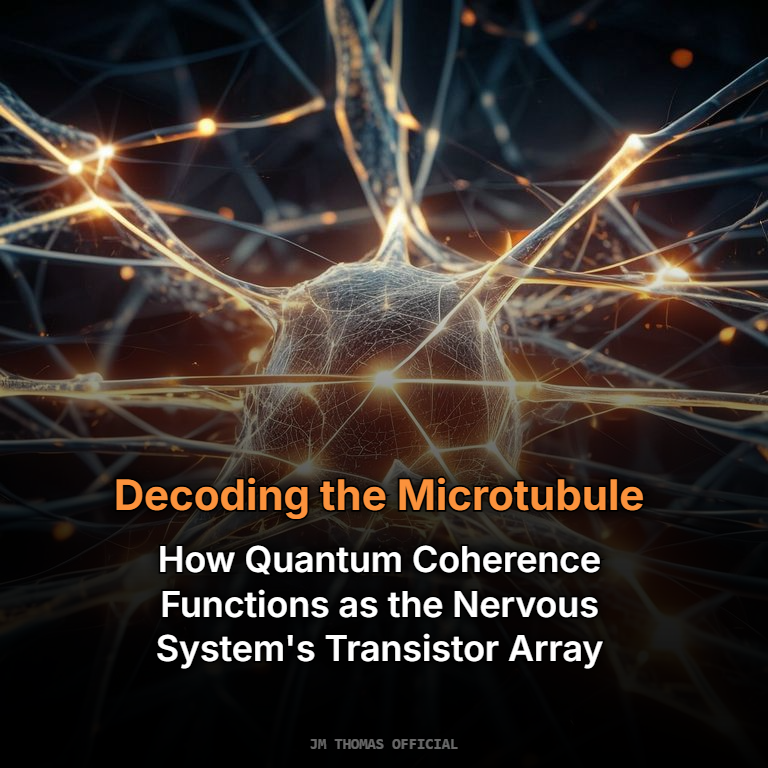
The great error in standard neuroscience is treating the brain as a sophisticated but ultimately classical computer. We map synapses, we trace chemical pathways, and we attempt to reverse-engineer thought using frameworks designed for silicon. This approach fails to account for the ‘hard problem’ – the undeniable subjective experience that defines consciousness. If we are to move past correlation and towards true causation, we must abandon the digital metaphor and embrace the physical reality of the biological substrate.
The Classical Limitation and the Temporal Void
Classical models cannot explain the sheer speed and complexity of integrated consciousness. Synaptic transmission operates on a millisecond scale. Yet, high-level integrated processing – the binding of sight, sound, and memory into a unified conscious moment – happens far faster than classical firing rates should permit. This temporal void suggests a mechanism operating beneath the level of membrane potential. This mechanism is not chemical, but informational, rooted in the physics of the system itself.
We must look to quantum biology, specifically the role of biological structures that are both shielded enough to maintain quantum states (coherence) and widespread enough to govern global brain function. These structures are the microtubules.
The Quantum Engine: Microtubules and the Orch OR Hypothesis
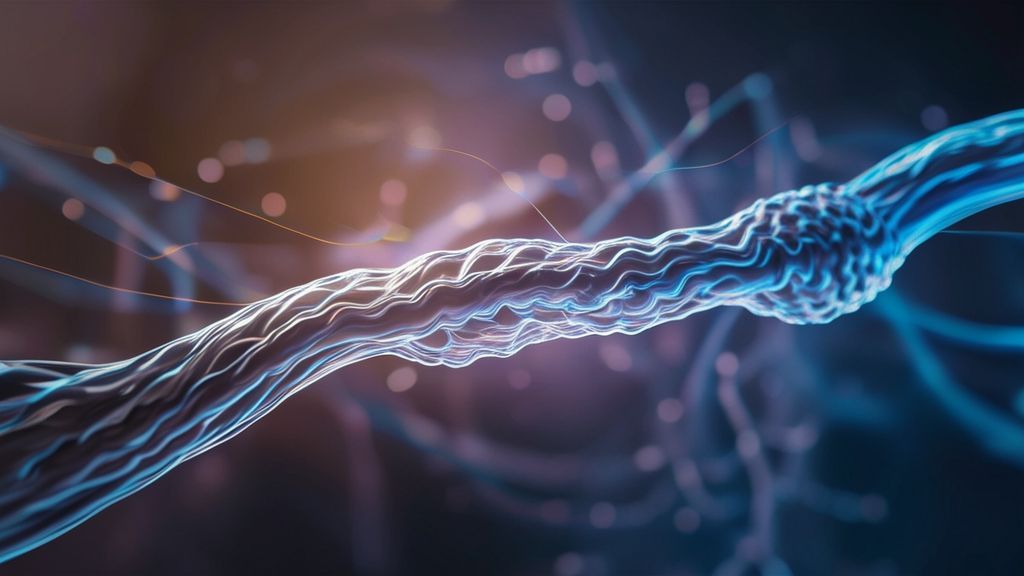
Microtubules are cylindrical polymers of the protein tubulin, found primarily within the axons and dendrites of neurons. They were traditionally seen merely as structural scaffolding – the cell’s cytoskeleton. However, their physical geometry and composition suggest they are far more than structural.
A single tubulin dimer is a complex structure, containing hydrophobic pockets capable of holding trapped electrons, and possessing inherent electrical polarization. When these dimers assemble into the microtubule lattice, they form a near-perfect, shielded, crystalline structure – an ideal environment for quantum computation. Sir Roger Penrose and Dr. Stuart Hameroff proposed the Orch OR (Orchestrated Objective Reduction) theory, positioning these microtubules as the physical substrate of consciousness.
In the Orch OR framework, tubulin dimers can exist in quantum superposition states, representing the fundamental ‘bits’ of biological computation. They are not firing classically; they are computing coherently. Consciousness, in this view, is the result of ‘Orchestrated Objective Reduction’ – a self-collapse event of these quantum superpositions, triggered by fundamental spacetime geometry, operating within the architecture of the microtubule.
Tubulin Coherence and the Anesthetic Key
The strongest empirical support for the quantum nature of microtubules comes from the mechanism of general anesthesia. Anesthetic gases do not block synaptic transmission; they are highly specific, binding weakly to hydrophobic pockets within the tubulin proteins, often without causing major structural changes. Yet, they instantly obliterate integrated consciousness.
If consciousness were purely synaptic, general anesthesia would require a wholesale shutdown of neurotransmission. Instead, it seems to disrupt the delicate quantum coherent state maintained within the microtubules. Anesthetics function as decoherence agents. By disrupting the electron states within the hydrophobic pockets, they break the quantum link across the tubulin lattice, causing the system to revert to classical, low-voltage noise. This is the difference between a high-fidelity quantum computer running complex calculations and a simple calculator running basic arithmetic.
The engineering requirement, therefore, is not just to maximize classical neuronal firing, but to maintain and amplify the quantum coherence within the nervous system’s deepest architecture.
The Biology of High-Voltage Coherence
You cannot run high-voltage consciousness on a degraded nervous system. The axiom holds true at the sub-cellular level. Quantum coherence is incredibly fragile. In a biological system, it is constantly battling decoherence caused by thermal noise and environmental instability. To maintain the microtubule transistor array in an optimized, coherent state requires rigorous bio-optimization.
1. Electrolyte and Hydration Integrity
The internal environment of the neuron is crucial. Microtubules rely on highly structured water layers and precise ion concentrations (especially magnesium and potassium) to stabilize their structure and electrical field. Degraded cellular hydration or dysregulated electrolyte balance introduces excessive thermal noise and charge fluctuations, acting as powerful decoherence agents. Optimizing the fluid mechanics of the cell is not a peripheral task; it is a foundational requirement for quantum computation.
2. The Role of Melanin and Structure
Melanin, often found in high concentrations near the central nervous system, is a biopolymer capable of exhibiting semi-conductive and even superconducting properties. Its role, particularly in systems like the substania nigra and the structures surrounding the Pineal Piezoelectricity, suggests it may function as a biological shield or energy conduit, protecting microtubule arrays from external electromagnetic interference and thermal fluctuations, thereby preserving coherence.
3. The Autonomic Ganglia Plexuses (AGP) Feedback Loop
The vast network of the Autonomic Ganglia Plexuses – the historical ‘chakras’ – are not mystical energy points; they are complex relay stations packed with nervous tissue that process visceral and environmental input. These plexuses feed massive streams of data back into the central nervous system, influencing global nervous system tension and biochemical output. Chronic sympathetic overload (fight or flight) translates directly into systemic biological inflammation and increased thermal noise – the enemy of quantum coherence.
Mastery of the AGP allows the organism to regulate the internal environment, minimizing decoherence factors and creating the necessary physical quietude for the microtubule array to engage in high-order processing.
Engineering Subjective Reality: RAS Filtering
If the microtubule array is the fundamental processor, what is it processing? It is processing raw information and collapsing it into subjective reality. The concept often labeled ‘manifestation’ is more accurately described as sophisticated RAS Filtering (Reticular Activating System Filtering), governed by the coherence and informational state of the sub-cellular nervous architecture.
A coherent system processes data efficiently, quickly aligning the internal collapse mechanism (Orch OR) with high-level cognitive intent. A noisy, incoherent system, ravaged by chronic stress and biological degradation, is incapable of maintaining the informational integrity required to align complex internal states with desired external outputs. It merely processes noise.
The Call to Protocol
Understanding the physics of consciousness is not an academic exercise; it is the blueprint for engineering subjective reality. If you operate exclusively in the realm of classical biochemistry and synaptic fire, you will forever miss the subtle, high-fidelity operations occurring at the quantum level of the microtubule.
To transition from simply managing symptoms to mastering the operating system requires foundational knowledge in advanced quantum biology, neurophysiology, and precise bio-optimization protocols. You must learn the mechanics of the nervous system before you attempt to reprogram it.
Initialize your protocol by mastering the core foundational concepts of biological mechanics, advanced neurophysiology, and the science of true high-voltage living. Start the deep study required to become your own lead system architect. This level of comprehensive, foundational knowledge is contained within The Library of Biological Wizardry.